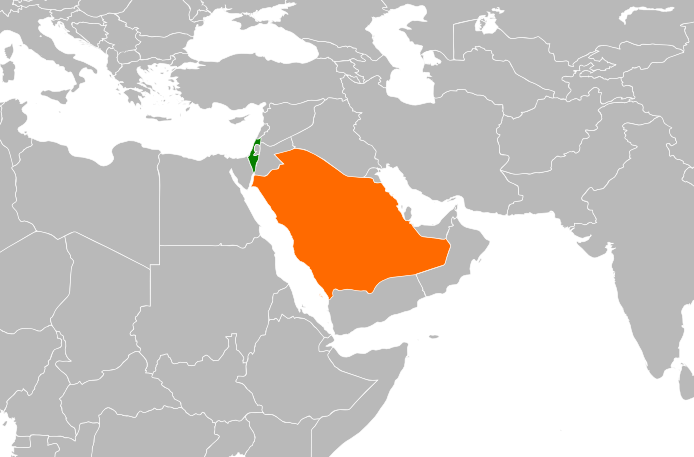

Riyadh | Tel Aviv | Washington
The conflict involving Yemen’s Houthi movement has become one of the defining geopolitical challenges in the Middle East, extending far beyond Yemen’s borders. What began as an internal political and military struggle has evolved into a regional security crisis with significant implications for Gulf security, international shipping, global energy markets, and the strategic calculations of major regional powers.
Against this backdrop, reports indicate that Saudi Arabia and Israel—countries that do not maintain formal diplomatic relations—have been engaged in indirect discussions, reportedly facilitated by the United States, concerning intelligence cooperation and regional security coordination. While neither government has officially announced a comprehensive security partnership, the reported dialogue reflects the growing importance of practical security considerations over traditional political divides.
Rather than representing an immediate diplomatic breakthrough, these developments illustrate how evolving security threats are reshaping regional strategic thinking.
From Yemen’s Civil War to a Regional Security Challenge
The Houthi movement, formally known as Ansar Allah, emerged from northern Yemen and gradually transformed into one of the region’s most influential armed groups. Since the outbreak of Yemen’s civil war, the organization has significantly expanded its military capabilities, including:
- Long-range ballistic missiles
- Cruise missiles
- Armed drones (UAVs)
- Anti-ship missiles
- Naval drones and maritime attack capabilities
These capabilities have enabled the Houthis to strike military facilities, airports, energy infrastructure, commercial shipping, and strategic maritime routes well beyond Yemen.
Security analysts widely view these developments as having transformed the conflict from a domestic civil war into an issue affecting regional stability and international commerce.
The Strategic Importance of the Red Sea
The Red Sea and the Bab-el-Mandeb Strait constitute one of the world’s most strategically significant maritime corridors. A substantial portion of global trade, including energy shipments between Europe, Asia, and the Middle East, transits through these waters.
Repeated attacks or threats against commercial vessels increase several global risks:
- Higher maritime insurance costs
- Shipping route disruptions
- Delays in international trade
- Increased transportation expenses
- Volatility in global energy markets
- Heightened naval deployments by multiple countries
Consequently, developments in Yemen increasingly influence international economic and security planning far beyond the Middle East.
Saudi Arabia’s Evolving Security Calculations
Saudi Arabia has long regarded the security of its territory, critical infrastructure, and energy facilities as a national priority.
Previous attacks on oil installations demonstrated that modern conflicts increasingly involve:
- Missile warfare
- Drone attacks
- Cyber threats
- Intelligence operations
- Hybrid warfare
These evolving threats have encouraged Riyadh to diversify its security partnerships while strengthening intelligence gathering, surveillance capabilities, missile defence systems, and regional coordination.
Current discussions reportedly focus less on political normalization and more on practical security cooperation against common threats.
Why Israel Matters in the Security Equation
Israel possesses some of the region’s most advanced capabilities in:
- Missile defence technologies
- Intelligence collection
- Drone interception
- Cyber security
- Electronic warfare
- Early warning systems
Although Saudi Arabia and Israel have no formal diplomatic relations, both countries have expressed concerns over regional instability and the activities of Iran-backed armed groups.
Security experts therefore argue that limited intelligence sharing or technical coordination—particularly through American mediation—could serve practical defence objectives without requiring immediate political normalization.
The Role of the United States
The United States remains a central security partner for several Middle Eastern countries and continues to play an important role in regional defence cooperation.
American military infrastructure across the Gulf supports:
- Air defence coordination
- Maritime security
- Intelligence sharing
- Counter-drone operations
- Strategic deterrence
Reports suggest that Washington has encouraged greater coordination among regional partners facing common security threats. Such coordination, where it occurs, should not automatically be interpreted as a comprehensive military alliance but rather as issue-specific cooperation designed to enhance regional stability.
Pakistan’s Position and Regional Debate
Public debate has intensified over Pakistan’s approach to the Houthi conflict and broader regional security issues.
Some geopolitical commentators have suggested that Pakistan’s decision not to become directly involved in military operations against the Houthis may have influenced Saudi Arabia to explore additional security partnerships.
However, it is important to distinguish analytical interpretation from verified fact.
At present:
- No official Saudi government statement has declared a loss of confidence in Pakistan.
- Pakistan has not acknowledged any deterioration in bilateral relations on this issue.
- No official agreement has been publicly announced linking Saudi-Israeli security discussions to Pakistan’s policy decisions.
Accordingly, assertions that Saudi Arabia has “abandoned” Pakistan or that bilateral trust has fundamentally broken down remain speculative unless supported by official government statements or independently verifiable evidence.
Iran and the Broader Regional Context
The regional security environment cannot be understood without considering the broader rivalry between Iran and several Gulf states.
Many governments in the region view Iran’s network of allied armed groups as an important factor influencing regional security calculations.
These concerns have encouraged greater emphasis on:
- Intelligence cooperation
- Air and missile defence integration
- Maritime surveillance
- Cyber resilience
- Joint security planning
While governments differ in their diplomatic approaches, common security interests increasingly shape strategic decision-making.
Emerging Security Architecture in the Middle East
Several trends indicate that the Middle East is undergoing a gradual transformation in its security architecture.
Traditional political divisions are increasingly being supplemented by pragmatic cooperation based on shared security interests rather than ideological alignment.
Areas receiving growing attention include:
- Missile defence integration
- Intelligence exchange
- Maritime security
- Counter-drone technologies
- Cyber security
- Protection of critical infrastructure
- Energy security
This evolution reflects a broader shift from conventional military alliances toward flexible, issue-based security cooperation.
Global Economic Implications
The consequences of regional instability extend well beyond the Middle East.
Persistent disruptions could affect:
- International oil prices
- Global inflation
- Supply chains
- Maritime logistics
- Energy security
- International investment confidence
For this reason, governments across Europe, Asia, and North America continue to monitor developments closely, recognising that instability in the Red Sea has direct implications for the global economy.
EX7 Investigative Research Analysis
Based on available public information and ongoing geopolitical developments, several observations emerge:
- The Houthi conflict has evolved from a domestic Yemeni crisis into a significant regional and international security challenge.
- Regional security interests are increasingly reshaping diplomatic engagement across the Middle East.
- Intelligence cooperation is becoming a central pillar of contemporary defence strategy.
- Maritime security in the Red Sea will remain a strategic priority for regional and global powers.
- Reports claiming that Saudi Arabia has fundamentally lost trust in Pakistan should be treated with caution unless supported by official government confirmation or independently verifiable evidence.
- Any future Saudi-Israeli security cooperation is more likely to be driven by strategic necessity and shared security concerns than by immediate political normalization.
- The evolving regional landscape demonstrates that modern geopolitics is increasingly influenced by practical security interests, technological capabilities, and economic interdependence rather than traditional diplomatic alignments alone.
Editorial Note
This investigative research analysis is based on publicly available information, official statements where available, expert geopolitical assessments, and observable regional developments. It clearly distinguishes verified facts from analytical interpretation and avoids conclusions that are not supported by official confirmation or credible evidence.
EX7 News remains committed to balanced, evidence-based, and public-interest journalism under its editorial principles:
“Documents Before Allegations. Facts Before Conclusions. Truth Beyond Headlines.”