By EX7 News | Research & Strategic Affairs Analysis
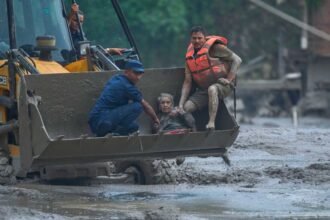
The upcoming first official visit of Nepal’s Prime Minister Balendra Shah to India is more than a routine diplomatic engagement—it is emerging as a defining moment in South Asian geopolitics. The visit comes in the immediate aftermath of one of the worst Himalayan flood disasters in recent history, when India responded with swift humanitarian assistance, reaffirming its role as Nepal’s closest partner in times of crisis.
Humanitarian Diplomacy Before Politics
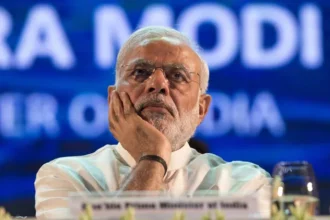
When devastating flash floods triggered by a glacial collapse ravaged Nepal, India moved quickly by dispatching nearly 50 metric tonnes of relief materials, including temporary shelters, medicines, blankets, hygiene kits and emergency supplies. Prime Minister Narendra Modi personally spoke with Prime Minister Balendra Shah, expressing condolences and assuring Nepal of every possible humanitarian assistance.
India’s response reflected a long-standing foreign policy principle often described as “Neighbourhood First”, where humanitarian cooperation precedes political negotiations.
Why the Visit Matters
The Nepalese Prime Minister’s decision to make India his first foreign destination sends a strong diplomatic signal. It underlines Kathmandu’s recognition of India’s strategic importance despite Nepal’s efforts in recent years to balance relations with both India and China.
Several key issues are expected to dominate bilateral discussions:
- Disaster management and early warning systems.
- Hydropower and cross-border electricity trade.
- Border infrastructure and connectivity.
- Trade and investment cooperation.
- Tourism and religious circuits including Pashupatinath–Kashi and Ramayana links.
- Climate resilience in the fragile Himalayan ecosystem.
Beyond Relief: Climate Security is the New Challenge
The Himalayan floods have once again highlighted that climate change is no longer an environmental issue alone—it is a national security challenge.
Scientists believe the disaster was triggered by a massive glacial collapse, demonstrating how rapidly melting Himalayan glaciers are increasing the frequency of catastrophic floods across Nepal and northern India.
For India, such disasters directly affect states like Bihar, Uttar Pradesh, Uttarakhand, West Bengal and Sikkim through transboundary rivers.
This makes Indo-Nepal cooperation on:
- Glacier monitoring,
- River basin management,
- Disaster forecasting,
- Climate research,
an urgent strategic necessity.
The China Factor
Although Nepal continues to maintain relations with China, the current humanitarian crisis has reminded Kathmandu that geographical proximity, cultural ties, an open border and rapid logistical connectivity make India its most dependable first responder during emergencies.
Analysts believe the visit is likely to strengthen strategic trust while maintaining Nepal’s independent foreign policy.
EX7 News Analysis
History has repeatedly shown that the India-Nepal relationship is built not merely on treaties but on shared civilisation, open borders, family connections and mutual assistance during times of crisis.
Natural disasters often test diplomatic relationships more effectively than formal summits. India’s immediate assistance during Nepal’s flood tragedy has reinforced confidence between the two neighbours.
The upcoming visit therefore represents not only a diplomatic milestone but also an opportunity to redefine bilateral cooperation around disaster resilience, climate security, infrastructure, energy, trade and regional stability.
As South Asia confronts increasingly severe climate-related disasters, stronger India-Nepal cooperation may become one of the region’s most important strategic partnerships for the coming decade.