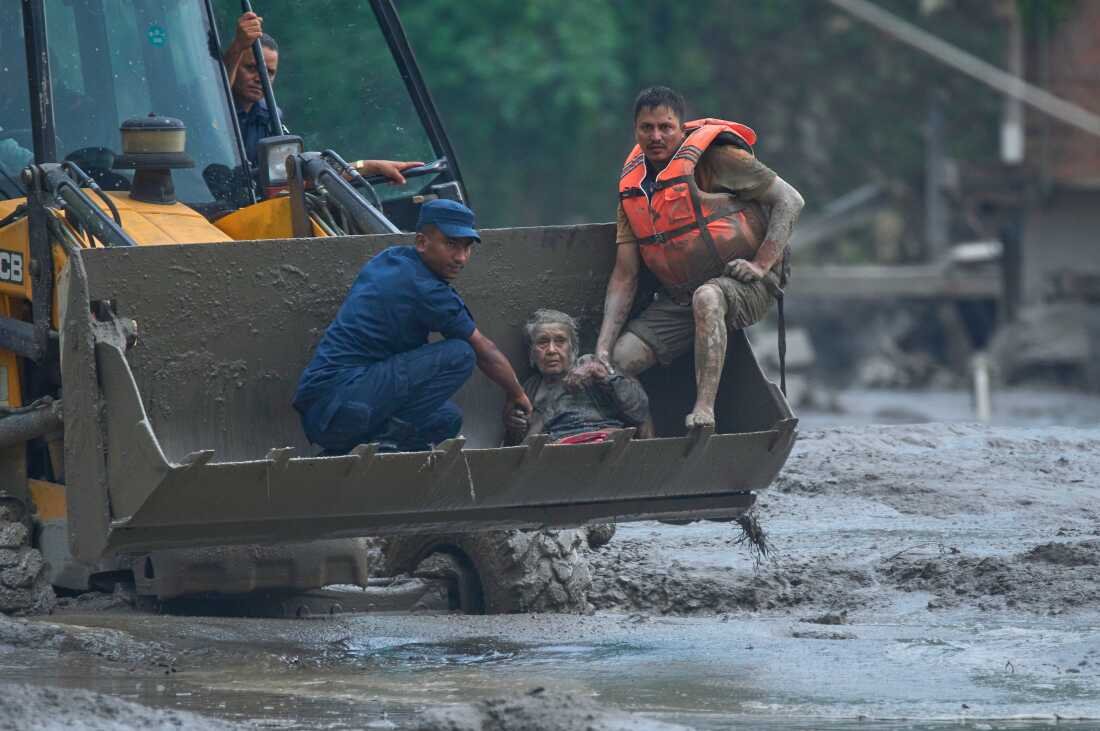

Mumbai/Kathmandu: Nepal has once again been devastated by severe floods, leaving behind a trail of destruction, displacement, and human suffering. As a trusted neighbour and long-standing friend, India has once again stepped forward by extending humanitarian assistance, rescue support, relief materials, and technical cooperation. Yet, a larger question continues to confront policymakers, scientists, and disaster management experts: Why does Nepal repeatedly suffer from catastrophic natural disasters such as earthquakes, floods, landslides, and glacial lake outburst floods?
The answer lies not in a single cause but in a combination of geography, climate, geology, and environmental challenges.
Nepal is situated in the young Himalayan mountain range, one of the world’s most geologically active regions. The Indian tectonic plate continues to push against the Eurasian plate, making Nepal highly vulnerable to powerful earthquakes. The same steep Himalayan terrain also creates conditions where intense monsoon rainfall rapidly flows downhill, triggering flash floods and landslides.
Climate change has further intensified this vulnerability. Rising temperatures are accelerating the melting of Himalayan glaciers, increasing the risk of Glacial Lake Outburst Floods (GLOFs). When these glacial lakes burst, enormous volumes of water rush downstream within hours, destroying villages, roads, bridges, and hydroelectric infrastructure.
The consequences are not limited to Nepal alone.
Several major rivers, including the Kosi, Gandak, Karnali, and Mahakali, originate in Nepal before entering India’s Terai belt. During heavy rainfall or sudden glacial floods, enormous quantities of water flow into Indian states, affecting Bihar, Uttar Pradesh, Uttarakhand, and parts of West Bengal. Every year, thousands of families living in India’s floodplains face displacement, crop losses, damaged infrastructure, and economic hardship because of upstream flooding.
This makes disaster management a shared regional responsibility rather than a purely national issue.
India and Nepal have steadily strengthened cooperation in flood forecasting, hydrological data sharing, infrastructure development, and disaster response. Indian agencies frequently provide technical support, emergency relief, medical assistance, and engineering expertise during major disasters in Nepal. Such cooperation reflects the deep historical, cultural, and humanitarian ties between the two neighbouring nations.
However, experts argue that long-term solutions require stronger collaboration in watershed management, afforestation, early warning systems, climate adaptation, resilient infrastructure, and scientific monitoring of Himalayan glaciers. Investment in sustainable development across the Himalayan region is essential to reduce the frequency and severity of future disasters.
As Nepal struggles to recover once again, the tragedy serves as a reminder that the Himalayas are not merely a geographical boundary but a shared ecological system. What happens in the mountains inevitably affects the plains below.
For India and Nepal, the challenge is not simply responding to disasters after they occur but building a future where scientific cooperation, environmental conservation, and regional preparedness can save thousands of lives.
(The views expressed are based on geographical, environmental, and disaster management perspectives intended for public awareness.)