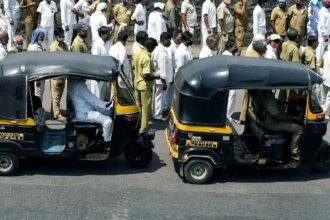
A fresh language controversy has erupted in Maharashtra after Maharashtra Navnirman Sena (MNS) leader Amit Thackeray reportedly warned that party workers would assault auto-rickshaw and taxi drivers found speaking Hindi instead of Marathi. The remarks have triggered sharp political reactions, raising concerns over linguistic harmony, constitutional rights, and the safety of migrant workers in the state.
The controversy comes amid the Maharashtra government’s recent decision to grant auto-rickshaw and taxi drivers a one-year period to learn functional Marathi before stricter enforcement of language requirements. While the government has defended the move as a balanced approach, the MNS has dismissed the decision as politically motivated.
Addressing party workers, Amit Thackeray questioned why drivers should be given additional time to learn Marathi and alleged that the state’s policy was influenced more by electoral calculations linked to upcoming Uttar Pradesh elections than by genuine concern for Maharashtra’s linguistic identity.
According to his reported remarks, MNS workers would not hesitate to “teach a lesson” to drivers who continue speaking Hindi instead of Marathi. The statement has intensified fears that such rhetoric could encourage vigilantism and create an atmosphere of intimidation among thousands of taxi and auto-rickshaw drivers, many of whom are migrants from northern Indian states.
The comments have also put Chief Minister Devendra Fadnavis under political pressure. The MNS accused the state government of compromising on Marathi pride for political convenience, while critics argue that threats of violence have no place in a democratic society.
Constitutional Questions
The controversy has once again revived the debate over the balance between promoting regional languages and protecting constitutional freedoms. While states are free to encourage the use of their official languages in administration and public services, legal experts note that every Indian citizen has the constitutional right to move, reside, and work anywhere in the country. Threats or acts of violence against individuals based solely on the language they speak may invite criminal liability under Indian law.
Impact on Public Transport
Maharashtra’s transport sector depends heavily on migrant workers from states such as Uttar Pradesh, Bihar, Jharkhand, and Rajasthan. Industry observers warn that any atmosphere of fear or violence could disrupt public transport services, affect tourism, and damage Mumbai’s reputation as India’s commercial capital.
Many commuters also point out that multilingual communication has long been a practical necessity in Mumbai, where Marathi, Hindi, and English are commonly spoken in daily life.
Political Flashpoint
Language politics has historically remained a sensitive issue in Maharashtra, periodically resurfacing ahead of major elections. Political analysts believe the latest controversy could further polarize public opinion, with one side emphasizing the protection of Marathi identity and the other stressing constitutional freedoms and national unity.
As of now, the Maharashtra government has maintained its stand that drivers will receive one year to acquire working knowledge of Marathi. Whether the latest statements will lead to legal action or further political confrontation remains to be seen.
Disclaimer: This report is based on publicly reported political statements. The reported threat reflects the views attributed to the speaker and not those of EX7 News. Any act of violence or intimidation is subject to the law, and allegations or statements should not be interpreted as established facts unless confirmed by competent authorities.