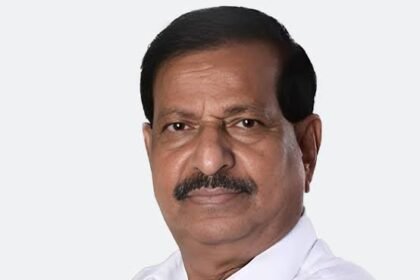
Nagpur: A statement made by Union Minister for Road Transport and Highways Nitin Gadkari during a public event—“I received more votes from crime-affected areas than from educated voters”—has triggered a fresh debate on voting behavior, voter psychology, and democratic politics. The remark has gone viral on social media and has drawn varied interpretations from political analysts.
Political Context of the Statement
According to publicly available information, Gadkari was sharing his political experiences and stated that, during elections, he received greater support than expected from areas generally regarded as “crime-prone” or affected by criminal activity. He also reiterated that he had never compromised with caste-based politics.
Is This a Data-Based Claim?
As of now, there is no official Election Commission data publicly available showing how many votes any candidate received specifically from “crime-affected areas.” Therefore, the statement should be understood as a personal political observation or commentary rather than a statistically verified conclusion.
Political Analysis
The statement raises several important questions:
- Is there a direct relationship between education levels and voting behavior?
- Do development initiatives influence voting patterns in crime-affected areas?
- Do voters prioritize local development over the social image of their locality?
- Does this statement reflect the complexity of voter behavior in Indian democracy?
Political experts believe that voting decisions are not determined solely by education levels. Local development, roads, water supply, employment opportunities, personal outreach, organizational strength, and the credibility of the candidate also play significant roles.
The Nagpur Model and Gadkari’s Politics
Nitin Gadkari has consistently advocated development-oriented politics in Nagpur. On several occasions, he has stated that his politics is based on development rather than caste, religion, or vote-bank considerations. In recent speeches, he has also emphasized the importance of accepting media criticism, honesty, and credibility as essential pillars of democracy and public life.
Democratic Significance
The statement highlights an important aspect of Indian democracy: voters cannot be confined to any single social category. In a democracy, every citizen’s vote carries equal value, regardless of their social, economic, or educational background.
EX7 News Analysis
EX7 News believes that every political statement should be evaluated in its full context, based on available facts and the public record. If the complete video of the speech, a detailed transcript, or additional factual information becomes available in the future, it should be subjected to an independent factual analysis.
(This article is based on publicly available information and political analysis. The reference to “crime-affected areas” reflects Union Minister Nitin Gadkari’s public statement and should not be interpreted as an official classification of any locality or community.)