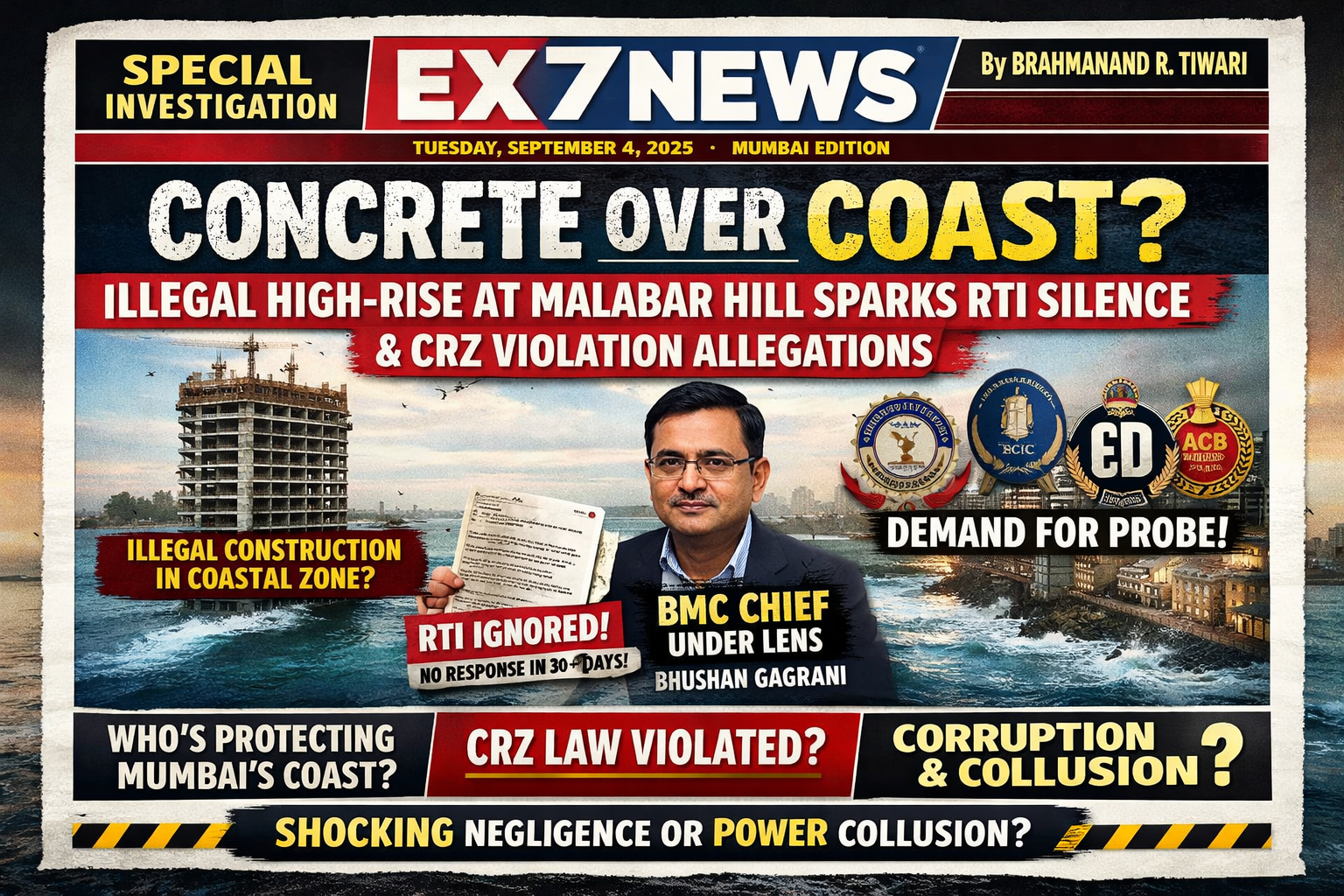

Mumbai’s elite coastal stretch at Malabar Hill—known for its ecological sensitivity and strict regulatory oversight—is now at the center of a growing controversy involving an alleged illegal multi-storey construction at Walkeshwar Road near Shital Baug Bus Stop.
The construction, reportedly coming up opposite Fionika Building, has triggered serious allegations of violations under the Coastal Regulation Zone (CRZ) framework, Development Control Regulations (DCR), and municipal building laws. Yet, despite repeated complaints and formal RTI applications, authorities appear to be maintaining a conspicuous silence.
Allegations of Building “Inside the Sea”
According to ground-level observations and complaints filed by this publication, the structure appears to be encroaching upon coastal-sensitive zones—raising a disturbing question:
Is Mumbai witnessing a case of construction literally advancing into the sea under administrative watch?
The area falls under CRZ norms governed by the Maharashtra Coastal Zone Management Authority and monitored by the Ministry of Environment, Forest and Climate Change. Any construction in such zones requires stringent environmental clearances, impact assessments, and compliance with coastal safeguards.
However, no publicly available records or disclosures confirm that such approvals exist in this case.
RTI Stonewalling: Silence Beyond 30 Days Multiple applications filed under the Right to Information Act, 2005 seeking:
Building approvals and commencement certificates,CRZ and environmental clearances, Stop-work or demolition notices, Inspection reports and officer accountability, have allegedly gone unanswered.
Under Section 7 of the RTI Act, failure to respond within 30 days constitutes “deemed refusal”, raising concerns of deliberate suppression of information.
This silence is particularly troubling given that the matter involves a high-value coastal zone and potential environmental violations.
Role of BMC Under Scrutiny
The Municipal Corporation of Greater Mumbai, headed by Municipal Commissioner Bhushan Gagrani, is the primary authority responsible for regulating construction within city limits.
Despite detailed complaints and documented submissions, no visible enforcement action—such as stop-work notices or demolition proceedings—has been observed on-site.This raises critical questions:
Are municipal officials overlooking violations? Has due diligence been bypassed?Is there administrative complicity or systemic failure?
CRZ Violations: A Threat to Coastal Ecology CRZ laws are designed to protect fragile coastal ecosystems from exactly such unchecked urban expansion. Violations in these zones can lead to:
Coastal erosion, Flooding risks
Irreversible ecological damage
Loss of public coastal access
Experts warn that illegal constructions in CRZ areas often proceed through misrepresentation, forged permissions, or regulatory capture.
Demand for Multi-Agency Investigation
Given the seriousness of the allegations, calls are now being made for intervention by multiple agencies, including:
State Vigilance Authorities
Anti-Corruption Bureau (ACB)
Central Bureau of Investigation (CBI)
Enforcement Directorate (ED)
The case may involve not just illegal construction, but also possible corruption, document forgery, and financial irregularities.
First Appeal Filed: Legal Battle Begins
Following the non-response to RTI queries, a First Appeal under Section 19(1) has been filed before the First Appellate Authority of BMC, citing:
Violation of statutory timelines
Suppression of public information
Failure to act on serious illegality
The appeal also seeks disciplinary action against the Public Information Officer under Section 20 of the RTI Act.
Bigger Question: Who Protects Mumbai’s Coastline?
This case is not just about one building. It reflects a deeper institutional concern:
Can powerful interests override environmental laws and municipal governance in India’s financial capital?
If verified, the alleged construction at Malabar Hill could become a landmark case exposing gaps in enforcement, transparency, and accountability.
As Mumbai continues to expand vertically, the integrity of its regulatory institutions is being tested. The silence of authorities in this case only amplifies suspicion.
Until transparency is restored and accountability fixed, one question will continue to echo:
Is the system enabling illegal construction—or failing to stop it?