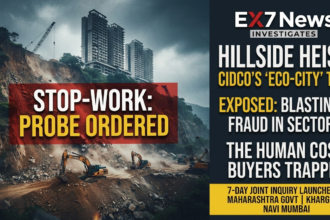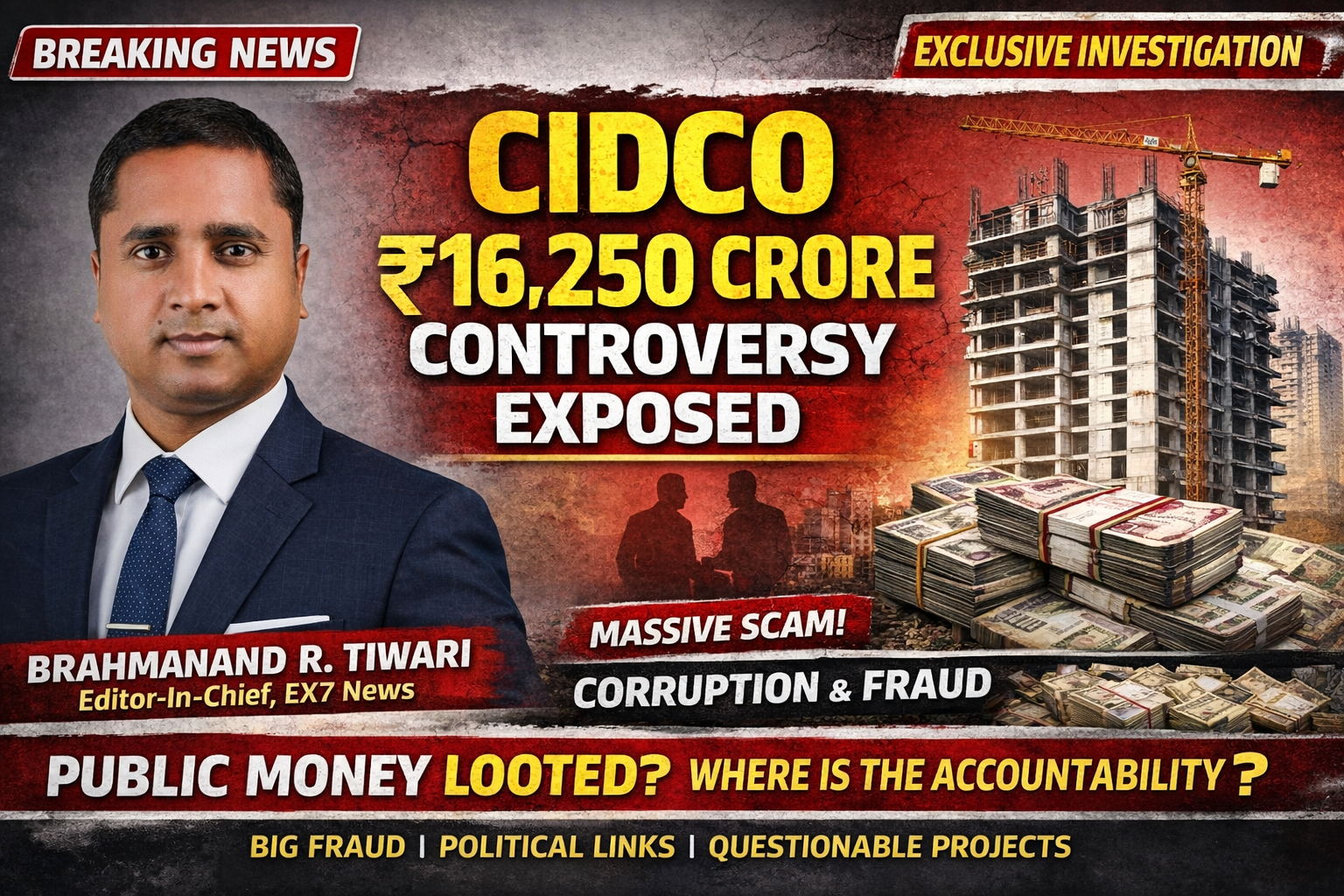

In a startling development, the ₹16,250 crore budget presented by City and Industrial Development Corporation of Maharashtra Ltd. for the financial year 2026–27 has come under serious scrutiny, raising questions about financial transparency, accountability, and governance.
An in-depth investigation based on RTI applications, field observations, and financial analysis reveals a pattern of disproportionate budget expansion, minimal profitability, and alleged irregularities in project execution and contract allocation.
Budget Expansion Without Justified Outcomes : CIDCO’s budget has seen a massive jump from approximately ₹9,774 crore in the previous year to ₹16,250 crore this year — an increase of nearly 66%.Despite such a significant rise, there is no proportional evidence of asset creation or revenue generation, raising concerns over possible budget inflation and lack of outcome-based planning.
Negligible Profit Raises Red Flags
Financial data indicates that despite handling investments worth thousands of crores, CIDCO reported a profit of only around ₹4 crore last year.Even with a projected target of ₹100 crore this year, the profit margin remains negligible, pointing toward:
Inefficiency in financial management
Possible leakage of public funds
Non-commercial decision-making patterns.
Infrastructure Spending Under Scanner
A significant portion of the budget has been allocated to large infrastructure projects, including:
Tunnel roads such as the Kharghar–Turbhe Tunnel Road (KTLR)
Housing projects under PMAY
Transport infrastructure projects
Experts suggest that such large-scale projects are particularly vulnerable to:
Cost inflation, Manipulation in contract variations, Lack of technical transparency.
Serious Concerns Over Project Execution
Field-level observations and local inputs indicate:
Substandard construction quality
Delays despite financial disbursement
Possible inflation in billing and quantities
These issues raise concerns about monitoring mechanisms and quality control in CIDCO projects.
Contract Allocation to Financially Weak Firms: The role of Capacite Infraprojects Ltd. has come under particular scrutiny.
Reports indicate that the company faced financial downgrades in previous years, including a default-grade rating in 2021, raising questions about:
Tender eligibility compliance
Due diligence by authorities
Possible favoritism in contract allocation.
43,000+ Houses Unsold: A Planning Failure?
One of the most striking findings is the existence of 43,332 unsold housing units in Navi Mumbai, priced between ₹50–75 lakh.This suggests:
Poor demand assessment
Inefficient planning
Potential wastage of public resources.
RTI Violations and Lack of Transparency, Repeated RTI applications filed under the Right to Information Act, 2005 have reportedly not received proper responses.
Key violations include:
Failure to respond within 30 days (Section 7(1)) Non-disclosure of mandatory information (Section 4(1)(b))
This pattern indicates a serious transparency deficit and possible suppression of critical information.
Environmental Concerns in Major Projects: Projects like the Kharghar–Turbhe Tunnel Road are under question for allegedly lacking publicly available:
Environmental Impact Assessment (EIA)
Forest clearance, Consent from Maharashtra Pollution Control Board
If true, this raises serious environmental and legal concerns.
Possible Systemic Issues: The investigation highlights potential systemic problems, including:
Budget inflation, Tender manipulation
Contractor favoritism, Overbilling and fund diversion, Weak audit and oversight mechanisms.
Call for Investigation: Given the seriousness of the findings, there is a growing demand for:
Independent investigation by vigilance authorities,Special audit by Comptroller and Auditor General of India
Review of contract awards and financial practices.
Conclusion
The ₹16,250 crore budget and associated project execution patterns of CIDCO raise critical questions about financial discipline, transparency, and governance.
Unless addressed promptly, these issues could lead to significant loss of public funds and erosion of institutional credibility.