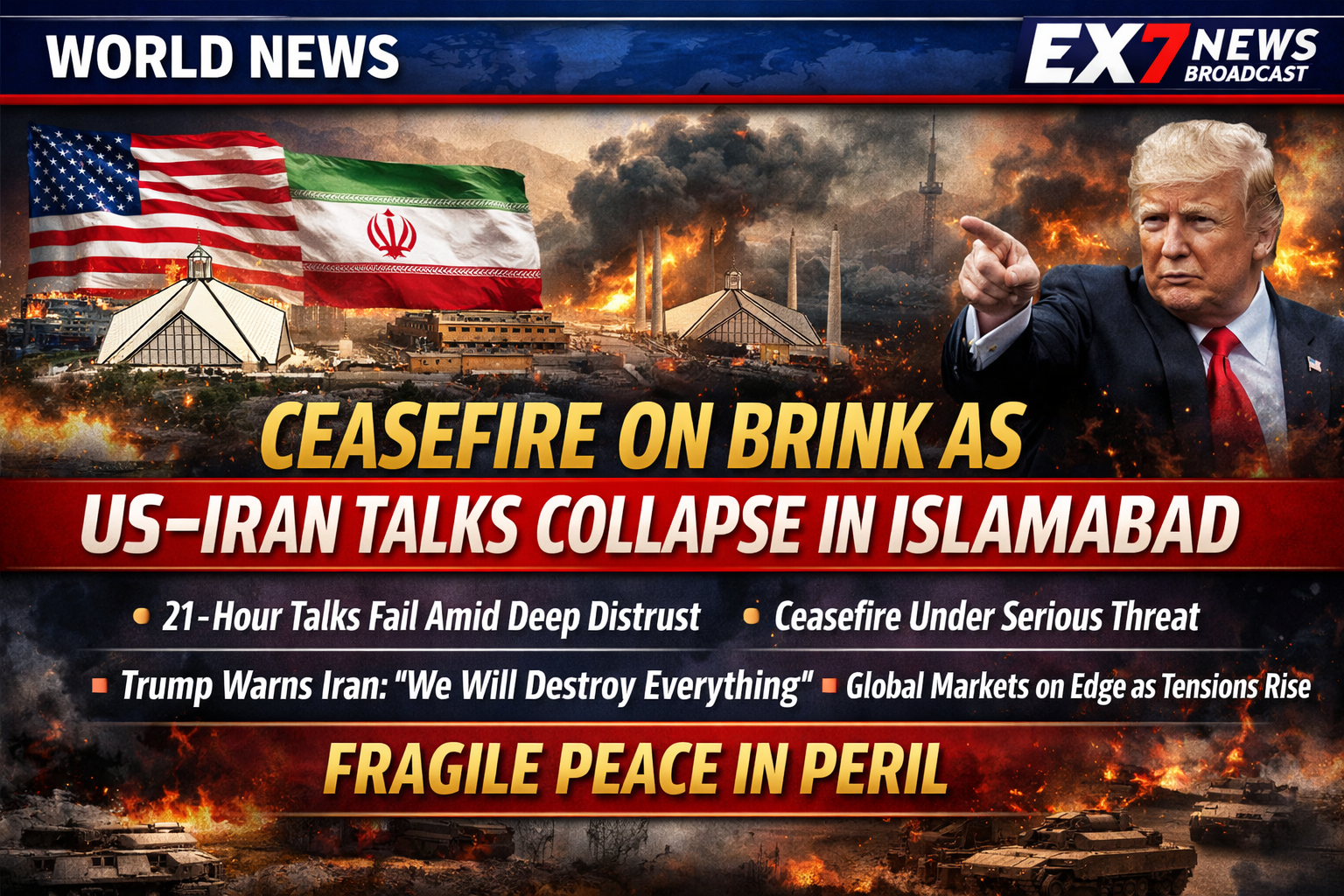

World Affairs Desk : In a dramatic escalation of global tensions, crucial peace talks between the United States and Iran have collapsed in Islamabad, Pakistan, leaving a fragile ceasefire hanging by a thread and raising fears of renewed conflict in the Middle East.
After nearly 21 hours of intense negotiations, both sides failed to reach an agreement, marking a major diplomatic setback in efforts to end a six-week-long confrontation that has already shaken global stability.
Axios +1, Talks Collapse Amid Deep Distrust, The high-stakes negotiations—mediated by Pakistan—were widely seen as a rare opportunity for direct engagement between Washington and Tehran after decades of hostility.
However, deep divisions over key issues, particularly Iran’s nuclear ambitions and regional security concerns, proved insurmountable.U.S. officials described the talks as “substantive but inconclusive,” while Iranian media accused Washington of making.
“excessive and unrealistic demands.”
Axios The breakdown has reinforced what analysts describe as a complete lack of trust between the two sides, significantly reducing hopes for immediate de-escalation, Ceasefire in Serious Danger, The failure of the talks has put a two-week-old ceasefire at serious risk, with no clarity on whether it will hold in the coming days.
Pakistan’s leadership has urged both nations to maintain restraint, calling the ceasefire “imperative” to avoid further escalation. However, ground realities suggest rising uncertainty, with military posturing and strategic movements continuing in the region.
Trump’s Hardline Warning Escalates Tensions Adding to the volatility, former U.S. President Donald Trump has reportedly issued a stark warning following the failed negotiations, suggesting that failure to reach a deal could lead to devastating consequences for Iran.
Such rhetoric has further heightened fears of a return to open conflict, especially given the already fragile diplomatic environment and ongoing military tensions across the region.
Global Economic Impact Intensifies
The geopolitical uncertainty is already having serious global repercussions:
Oil markets remain volatile amid concerns over supply disruptions
Shipping routes through the Strait of Hormuz—a critical global energy corridor—face continued uncertainty
Gulf stock markets have shown declines following the collapse of talks.
Experts warn that prolonged instability could trigger wider economic shocks, impacting fuel prices, trade routes, and global inflation.
What Lies Ahead?
Despite the setback, some diplomatic channels remain open. International leaders, including allies such as Australia, have urged both sides to resume negotiations and preserve the ceasefire, However, with positions hardening and rhetoric intensifying, the path forward appears uncertain.
The collapse of the Islamabad talks marks a critical turning point in the ongoing crisis. With trust at an all-time low and warnings of escalation growing louder, the world now watches anxiously as the fragile ceasefire teeters on the edge.
Whether diplomacy can be revived—or whether the region slides back into conflict—may depend on the next moves from Washington and Tehran in the coming days.