
A National Hero Turned Political Prisoner?
Very few personalities have transformed themselves as dramatically as Imran Khan. He was once Pakistan’s most celebrated cricketer, leading his country to the 1992 Cricket World Cup and becoming a symbol of national pride. After retirement, he entered politics with the promise of building a “Naya Pakistan” (New Pakistan)—a nation free from corruption, dynastic politics, and economic mismanagement.
Millions of Pakistanis, especially young voters, saw him as the leader who could break the decades-old political monopoly of traditional parties.
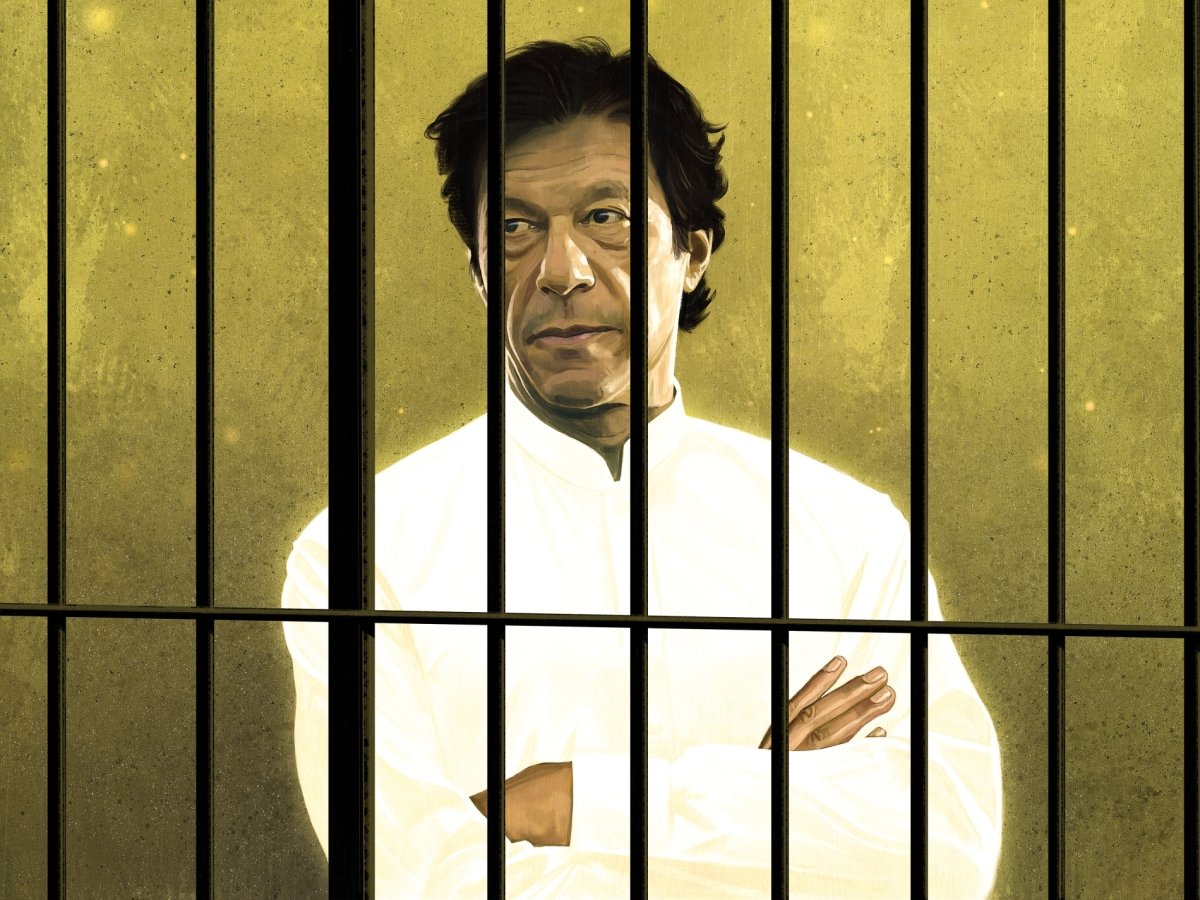
However, today Imran Khan remains imprisoned while facing numerous legal cases. His supporters call him a victim of political persecution, whereas Pakistan’s government insists that he has been convicted through judicial proceedings and denies allegations of political revenge.
How Did a Cricket Superstar Become Pakistan’s Most Powerful Politician?
Imran Khan founded the Pakistan Tehreek-e-Insaf (PTI) in 1996. For nearly two decades, his party remained on the political margins.
His image as an honest outsider gradually attracted Pakistan’s urban middle class, overseas Pakistanis, and young voters frustrated with corruption and poor governance.
By 2018, PTI formed the government and Imran Khan became Prime Minister, promising:
- Eliminate corruption.
- Reform governance.
- Improve education and healthcare.
- Strengthen Pakistan’s economy.
- Reduce political influence of powerful elites.
His rise generated enormous public optimism.
The Pakistani Military: The Invisible Power Centre
Any discussion of Pakistan’s politics is incomplete without understanding the role of its military.
Since independence in 1947, the Pakistan Army has remained the country’s most powerful institution. Military chiefs have directly ruled Pakistan through coups and have also exercised significant influence over civilian governments during democratic periods.
Many political analysts argue that no elected government in Pakistan can function for long without maintaining a workable relationship with the military establishment, although the military rejects claims that it controls politics.
Why Did Imran Khan Fall?
Relations between Imran Khan and Pakistan’s military leadership deteriorated after disagreements over senior appointments and foreign policy.
In April 2022, he lost a parliamentary vote of no confidence and was removed from office.
Following his removal:
- Numerous legal cases were filed.
- He was arrested multiple times.
- PTI leaders were detained.
- Supporters staged nationwide protests.
- Violent unrest followed his May 2023 arrest.
Political Revenge or Rule of Law?
This remains one of Pakistan’s most divisive questions.
PTI argues that the legal cases are politically motivated and designed to keep Imran Khan out of politics.
The Pakistani government maintains that Khan is a convicted prisoner and that the courts—not politicians—have determined his legal status. Authorities also reject allegations of mistreatment in prison.
These competing narratives continue to polarize Pakistani society.
Why Did Pakistan’s Youth Support Him?
Imran Khan represented hope for many young Pakistanis because he promised:
- Merit over political connections.
- Strong anti-corruption reforms.
- National dignity.
- Economic revival.
- Independent foreign policy.
For millions, he became more than a politician—he became a symbol of change.
Is Pakistan’s Democracy Under Pressure?
Pakistan continues to face several structural challenges:
- Political instability.
- Economic crises.
- High inflation.
- Security threats.
- Tense civil-military relations.
- Weak institutional trust.
Frequent confrontations between elected governments and powerful institutions have made democratic continuity difficult.
Is Pakistan a Threat to the World?
Pakistan is a nuclear-armed state with strategic importance in South Asia.
Whether it becomes a greater source of regional stability or instability depends on:
- Democratic governance.
- Economic reforms.
- Counter-terrorism efforts.
- Civil-military balance.
- Peaceful relations with neighboring countries.
It would not be accurate to describe Pakistan itself as inherently “a threat to the world.” However, continued political instability, extremist violence, and tensions involving a nuclear-armed state remain matters of international concern.
Conclusion
The story of Imran Khan is not merely the journey of a cricket legend turned politician. It reflects the deeper struggle over democracy, institutional power, accountability, and public trust in Pakistan.
Whether history ultimately views him as a reformer, a flawed leader, or a victim of political conflict will depend on future legal developments and the judgments of historians. What is beyond dispute is that his rise and imprisonment have profoundly reshaped Pakistan’s political landscape and continue to influence the country’s democratic future.