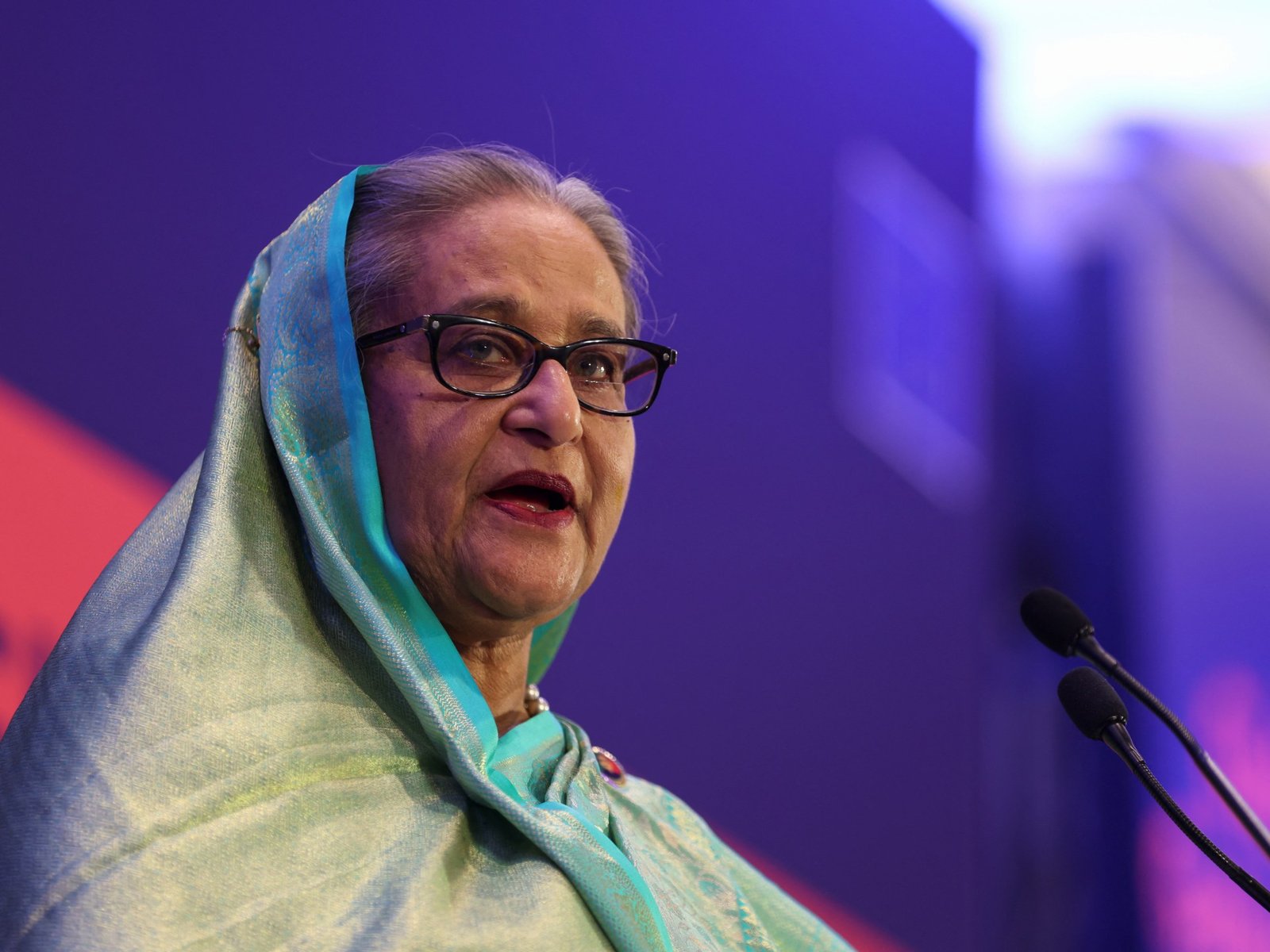

Bangladesh is on edge as the International Crimes Tribunal (ICT) prepares to announce its verdict today in a high-profile case involving former Prime Minister Sheikh Hasina. In an extraordinary move reflecting the gravity of the moment, the Supreme Court on Monday directed the government to deploy army personnel across major cities and sensitive districts as a precautionary measure.
The Home Ministry confirmed receiving the directive and stated that troops will remain on standby to assist the civil administration, Rapid Action Battalion (RAB), and local police forces. Officials described the army deployment as a “preventive security measure” aimed at ensuring stability before and after the verdict.
Political tensions have been escalating over the past several weeks. While the Awami League leadership has called the trial “politically motivated”, opposition groups insist the case represents an important legal process. Dhaka, Chittagong, Sylhet, and Khulna have already seen heightened patrolling, new checkpoints, and increased surveillance.
Educational institutions in several districts have been advised to close, and Section 144 has been imposed in sensitive zones to curb public gatherings. Several diplomatic missions have also issued travel advisories for foreign nationals in Bangladesh.
The government has urged the public to remain calm, stating that all necessary precautions have been taken. The ICT is expected to deliver its verdict at 11 a.m. today.
A Crucial Verdict With High Stakes for Bangladesh
The ICT’s decision in a case involving Sheikh Hasina—one of Bangladesh’s longest-serving and most influential leaders—marks one of the most sensitive judicial moments in the nation’s recent history.
The Supreme Court’s rare order deploying the army stems from three major concerns:
1. Fear of Mass Protests or Violence
Hasina still commands a vast and loyal support base within the Awami League. A verdict perceived as unjust could trigger widespread demonstrations, especially in Dhaka.
2. Extreme Political Polarization
Bangladesh’s politics—long defined by the rivalry between the Awami League and the BNP—has reached a boiling point. Mobilization efforts from both sides and possible exploitation by fringe groups have increased risks.
3. International Scrutiny
Human rights organizations and Western governments have closely followed the case. Any instability may hurt Bangladesh’s diplomatic standing, international reputation, and economic environment.
Analysts say that if Hasina is convicted, Awami League supporters may launch mass protests, while the BNP may claim political vindication. If she is acquitted, the opposition is likely to challenge the credibility of the judicial system.
Either way, the ruling is expected to shape Bangladesh’s political trajectory for years.
Bangladesh Braces for ICT Verdict: Army Deployment Signals Deep Concern
This verdict is more than a legal judgment—it is a moment of national reckoning. Sheikh Hasina ruled Bangladesh for over 15 years and remains a defining figure in its politics.
International observers—including Human Rights Watch, Amnesty International, and South Asian legal experts—describe the case as a test of judicial independence.
Why the Army Was Ordered to Deploy
Bangladesh has a history of political turbulence surrounding major court verdicts. Previous judgments involving top leaders have often resulted in:
-
Massive street protests
-
Transport blockades
-
Violent clashes
-
Damage to public property
-
Disruptions to essential services
The Supreme Court’s directive seeks to prevent a repeat of such events. The army’s presence aims to:
-
Deter violent mobilization
-
Support civilian law enforcement
-
Protect courts and government buildings
-
Ensure continuity of essential public services
Political Stakes for the Awami League and BNP
For the Awami League
-
Sheikh Hasina is central to the party’s identity and organizational strength.
-
A conviction could demoralize cadres and deepen internal divisions.
-
It may trigger large-scale mobilizations that risk violent confrontations.
For the BNP
-
A conviction would be framed as proof of their long-standing allegations of Awami League authoritarianism.
-
The verdict may energize their political revival after years of limited influence.
Economic and International Impact
Bangladesh is already battling inflation, a weakening taka, and declining foreign reserves. Political instability could disrupt:
-
Garment exports (the backbone of the economy)
-
Foreign investments
-
Global trade partnerships
-
Domestic financial stability
Several embassies have issued advisories urging their citizens to avoid crowds and unnecessary travel.
Public Mood: Anxiety and Suspense
Across Dhaka and other major cities:
-
Markets and public transport networks remain tense
-
Parents fear disruptions due to school closures
-
Businesses are preparing for potential shutdowns
-
Social media is awash with polarized commentary, misinformation, and emotional appeals
Authorities have warned against spreading rumors, stressing that strict action will be taken.
Conclusion: A Verdict That May Redefine Bangladesh’s Political Future
Today’s ICT verdict is not merely a legal outcome—it will influence Bangladesh’s democratic trajectory, political balance, and stability for years to come.
Whether it ushers in calm, triggers unrest, or forces a realignment of political forces, its impact will be immediate and far-reaching.
For now, Bangladesh waits—tense, divided, and heavily guarded—as the army stands watch on one of the most consequential days in the nation’s recent history.