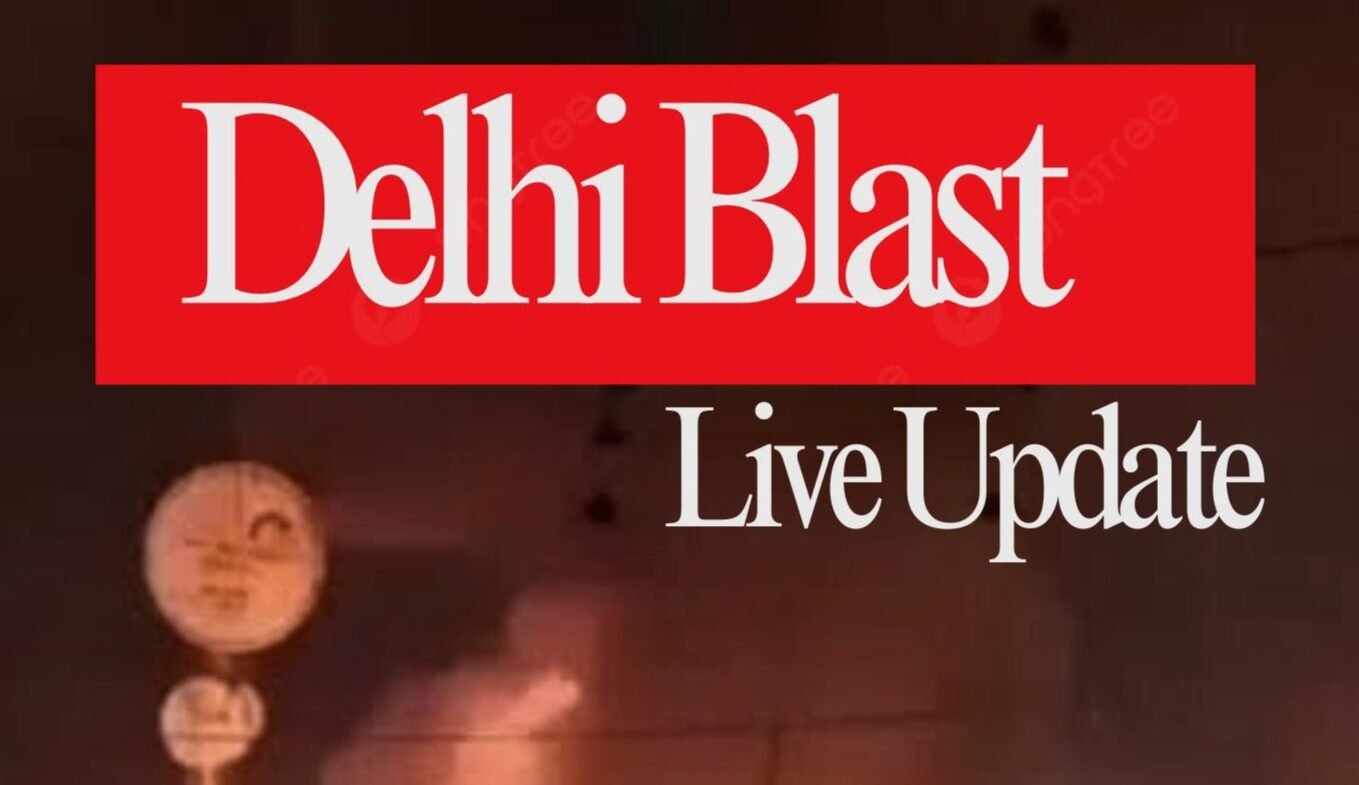

On the evening of Monday, 10 November 2025, a high-intensity explosion ripped through a slow-moving car near Gate 1 of the Lal Quila (Red Fort) Metro Station in Old Delhi. The blast destroyed nearby vehicles, triggered multiple fires, and caused several civilian deaths and injuries. Indian authorities have classified the incident as a terrorist act, invoking anti-terror laws and launching a multi-agency probe. Within 24–48 hours, investigators linked the blast to a wider terror “module” described as a network of radicalised professionals operating across Jammu & Kashmir, Haryana, and parts of the NCR. Early leads include CCTV footage tracking the suspected vehicle, arrests connected to a Faridabad cell, large seizures of explosive materials and weapons, and reported links to Pakistan-based handlers and the Jaish-e-Mohammed (JeM) group.
What Happened — Facts Established So Far
Time & Place: The explosion occurred in the evening near the Lal Quila (Red Fort) metro station in Old Delhi, during peak hours, around 7:00 pm. Several nearby vehicles caught fire following the blast.
Casualties: Initial reports cited between 8–13 fatalities and around 20–24 injuries. The final figures were being verified through DNA and forensic tests.
Explosive Source & Platform: The blast originated in a Hyundai i20 (registered in Haryana). CCTV footage and forensic evidence identified the car as the epicentre. Human remains were recovered from the vehicle, raising questions about whether it was a suicide attack or an accidental detonation. Samples were sent to the Forensic Science Laboratory (FSL) for analysis.
Who Investigators Say Is Behind the Conspiracy
Investigative Picture (Still Evolving)
Police and national agencies have traced the incident to a “white-collar” terror module — a network of radicalised professionals and students operating across Jammu & Kashmir and Delhi-NCR. Multiple media reports confirm arrests of medical professionals (including doctors) and associates in Faridabad and J&K, linked to the probe. Authorities say the module had connections with handlers abroad and ideological ties to Pakistan-based militant groups, with Jaish-e-Mohammed (JeM) under investigation as a possible link.
Named Suspects (As Reported by Indian Media)
Suspects reportedly include Dr. Umar (Umar Mohammad / Umar Nabi), a doctor from Pulwama believed to be the driver of the i20 in CCTV footage, and other medical professionals such as Dr. Muzammil / Muzamil Shakeel and Adeel / Adil Rather, arrested in Faridabad. Police stated that some suspects were associated with Al-Falah University (Faridabad) and rented properties where explosive materials were found. These identifications are provisional, pending court confirmation.
Caution: Early media reports and police statements remain preliminary until supported by formal charges and court documentation. Conflicting early accounts persist regarding the explosion’s cause and casualty figures.
Seized Equipment and Explosive Materials
Multiple raids conducted in connection with the case revealed a large stockpile of explosives and weapons:
-
Explosive Precursors and Chemicals: Reports indicate around 2,900 kg of bomb-making materials, including ammonium nitrate, potassium nitrate, and sulphur. Some raids uncovered smaller individual caches (e.g., 350–360 kg in Faridabad).
-
High-Grade Explosives: Some searches targeted suspected labs, with traces of RDX and other high-yield compounds under laboratory verification.
-
Bomb-Making Components: Authorities recovered 20+ timers, detonators, batteries, remote devices, containers with explosive mixes, and 5 kg of heavy-metal components used in improvised explosive devices (IEDs).
-
Firearms and Ammunition: Seizures included AK-47 rifles, pistols, and live ammunition from various linked premises.
The combined evidence suggests a vehicle-borne IED (VBIED) capability and a network capable of assembling high-impact explosive devices.
Terrorist Operational Model — What the Evidence Suggests
-
Cell Structure — “White-Collar” Network: Authorities describe the group as a radicalised network of professionals — including doctors and lecturers — involved in logistics and planning. Their professional backgrounds made detection difficult, as they had access to laboratory materials, mobility, and institutional legitimacy.
-
Hybrid Technical Approach: The combination of bulk oxidisers, timers, detonators, and high-energy materials indicates an ammonium-nitrate or RDX-based hybrid design for maximum blast yield. The use of a Hyundai i20 matches a VBIED model, intended for urban destruction.
-
Decentralised Network with External Handlers: Investigators allege foreign handlers, particularly in Pakistan, may have directed the operation ideologically or technically. Links to JeM are a primary line of inquiry.
-
Evasion Tactics: The group used professional credentials, short-term rentals, and access to labs to conceal activities. Vehicles and materials were distributed across states to avoid detection.
Open Questions and Ongoing Forensic Work
-
Exact Cause of Blast: Whether it was a suicide detonation, remote/timed IED, or accidental trigger is still under FSL examination.
-
Explosive Composition: Laboratory testing will determine whether the blast used ANFO-type mixtures or military-grade RDX/TNT.
-
Chain of Command: Investigators continue to establish the hierarchy and role of external support networks.
Timeline of Events (Condensed)
-
8–10 November 2025: Police in J&K and Haryana conduct raids in Faridabad and other areas, seizing explosives and arresting suspects.
-
10 November 2025 (Evening): A Hyundai i20 explodes near Red Fort; multiple vehicles are destroyed; casualties are reported.
-
11 November 2025 (Next 24 Hours): CCTV footage reviewed; suspects identified; arrests made in Faridabad; seizures of arms and explosives confirmed. National agencies including NIA and FSL join the investigation.
Political and Security Implications
-
Symbolic Impact: The Red Fort — a national monument and venue of India’s Independence Day address — amplifies the symbolic weight of the attack. The incident prompted swift political condemnation and heightened diplomatic tension.
-
Shift in Threat Profile: The case highlights a new wave of professional radicalisation, using academic and medical infrastructure for logistical purposes, prompting enhanced scrutiny of professional networks and chemical supply chains.
-
Intelligence Priorities: Authorities are now mapping financial flows, encrypted communications, and cross-border coordination channels, alongside efforts to tighten regulation of precursor chemicals.
-
Diplomatic Fallout: Allegations of involvement by Pakistan-based handlers and JeM are expected to heighten bilateral tension and spur international counter-terror discussions.
Recommended Lines of Investigation
-
Conduct forensic chemical analysis of residues to confirm explosive type and device design.
-
Pursue digital forensics to trace communications, payment flows, and handler links.
-
Trace chemical purchases and cross-border funding patterns.
-
Strengthen cross-agency and international coordination for intelligence sharing and legal cooperation.
Conclusions
The 10 November 2025 Red Fort blast is being treated as a deliberate terrorist incident. Evidence so far indicates a vehicle-borne explosion linked to a white-collar terror module operating from Faridabad and J&K, including medical professionals. The seizures of explosive precursors, weapons, and detonators confirm the module’s capability to execute large-scale attacks. However, final forensic and legal confirmations — including the exact explosive composition, chain of command, and role of foreign handlers — remain pending. The involvement of Jaish-e-Mohammed (JeM) is a key investigative line, though judicial confirmation is awaited.