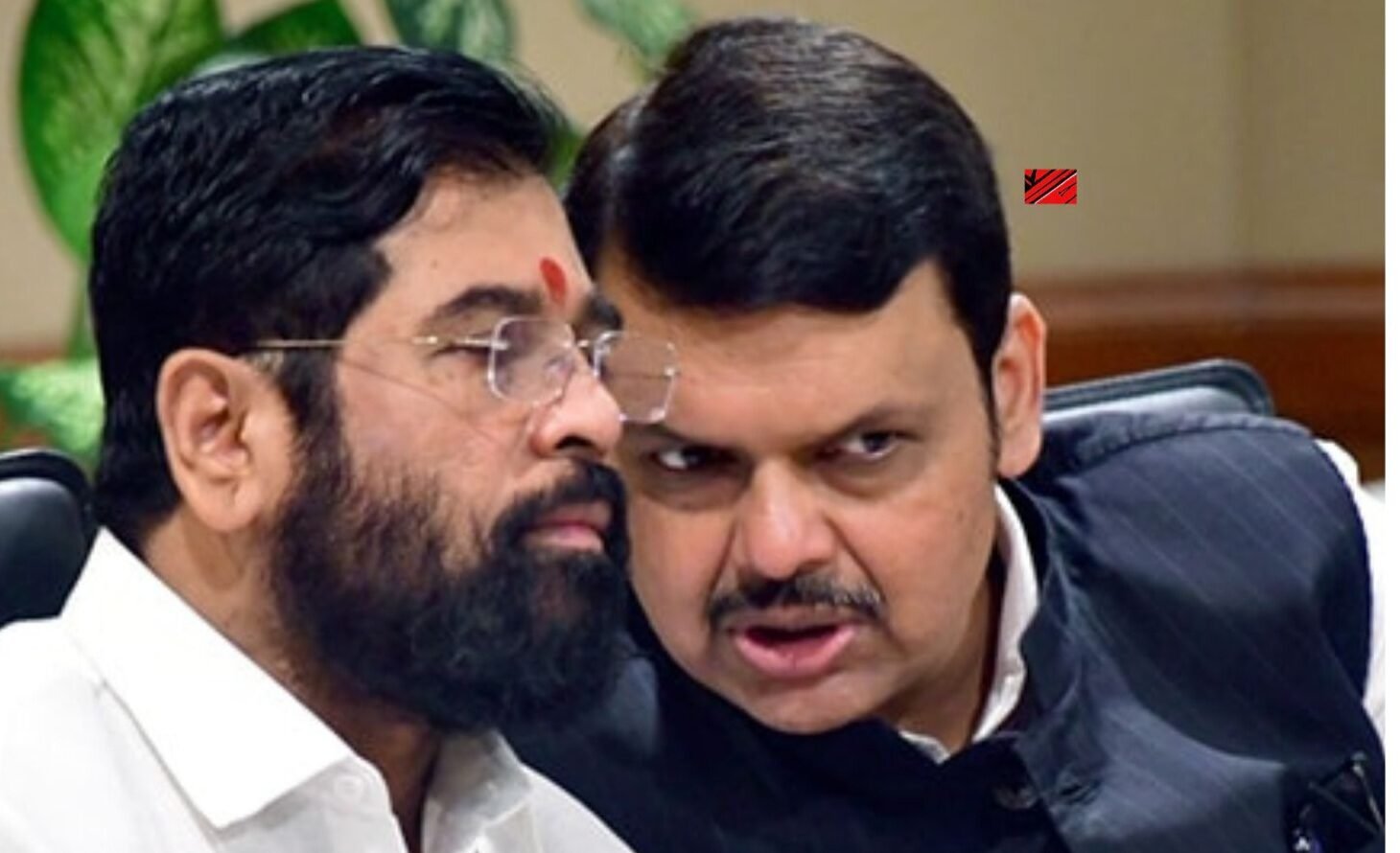

Mumbai – As Maharashtra prepares for its long-pending local body elections, scheduled for early December 2025, attention is firmly on Chief Minister Devendra Fadnavis and Deputy Chief Minister Eknath Shinde. For both leaders, these polls are far more than routine civic elections — they represent a test of organisational strength, alliance stability, and governance credibility.
Stakes High for the Ruling “Mahayuti”
The state’s ruling coalition — the Mahayuti, comprising the BJP, Shiv Sena (Shinde faction), and the NCP (Ajit Pawar faction) — secured a decisive victory in the 2024 Assembly elections. The upcoming civic polls now offer the opportunity to convert that mandate into deep grassroots influence across municipalities, councils, and panchayats.
CM Fadnavis has publicly emphasised alliance unity, asserting that the Mahayuti will contest “together,” while acknowledging that local political realities may require flexibility.
For Shinde, these polls carry heightened significance in the Mumbai Metropolitan Region and surrounding belt — his traditional stronghold — where the Shiv Sena (Shinde faction) aims to strengthen its hold and counter rival Sena factions and emerging competitors.
Alliance Friction & Strategic Calibration
Despite projecting unity, internal frictions persist. Pre-poll alliances remain uncertain in several regions, with local-level workers reluctant to concede traditional seats to coalition partners. In multiple municipal bodies, the BJP, Shiv Sena (Shinde), and NCP (Ajit Pawar) may run separately.
In the Mumbai region, the BJP has announced that in some civic bodies its allies may contest solo, while in others they will join forces — a sign of the delicate balancing required due to region-specific dynamics, incumbency factors, and seat strengths.
The Development Narrative vs Ground Realities
The ruling alliance enters the polls showcasing major infrastructure projects, urban upgrades, and civic initiatives. It expects this development-heavy narrative to resonate in semi-urban and rural municipal bodies.
Opposition parties frame the elections as a referendum on the government’s actual delivery — questioning whether civic services, grassroots representation, and local governance have genuinely improved.
The fact that many civic bodies have lacked elections for nearly a decade adds to voter expectations and impatience.
Will There Be a “New Miracle”?
A few potential scenarios emerge:
Success Scenario
The Mahayuti performs strongly across councils, panchayats, and municipal bodies in the first phase, builds a solid cadre base, and gains momentum ahead of major municipal corporation elections like the BMC. This would solidify the leadership of Fadnavis and Shinde and strengthen the alliance at the grassroots.
Stagnation Scenario
The alliance retains existing ground but fails to expand meaningfully — delivering a stable yet unremarkable result that reinforces the status quo rather than shaping a new political landscape.
Under-performance Scenario
The alliance struggles in key municipalities, internal seat-sharing tensions surface, opposition or independents win influential wards, and governance concerns dominate the narrative. This would undermine the idea of a “new miracle” and give opposition alliances renewed leverage.
Key Watch-Points
1. Campaign Machinery & Ground Mobilisation
The BJP has already named 40 “star campaigners.” The effectiveness of mobilisation will be closely watched.
2. Defections & Local Realignments
Especially in the Mumbai–Thane belt, where Shinde’s influence is strongest.
3. Seat-Sharing Formula
How the BJP, Shiv Sena (Shinde), and NCP (Ajit Pawar) distribute seats in overlapping strongholds.
4. Voter Sentiment
Whether development narratives triumph over local issues such as service delivery, representation, and caste/community dynamics.
5. Opposition Performance
The role of Maha Vikas Aghadi and independent/local parties in challenging Mahayuti dominance.
The results of the first phase (scheduled for December 2, 2025) will shape the momentum for subsequent phases and the more high-profile municipal corporation elections.
Conclusion
Devendra Fadnavis and Eknath Shinde stand at a critical juncture. The Maharashtra local body elections of 2025 will not only test their ability to secure electoral victories but also their capacity to institutionalise strong civic governance, build local cadres, and convert state-level authority into grassroots power.
Whether this becomes a turning point — a new chapter in Maharashtra’s municipal politics — or simply a reaffirmation of existing political structures remains to be seen. If the alliance delivers, it will mark a significant shift. If not, the much-discussed “miracle” may prove premature.